
Table of Contents
The Macro Bottleneck: The Transition from Silicon Scarcity to the Power Wall
The global economic and technological narrative of 2026 has definitively shifted its locus of anxiety from the proliferation of silicon to the acquisition and transmission of megawatts. During the initial, explosive phases of the artificial intelligence boom spanning 2021 through 2024, the primary constraints on the expansion of generative AI models were firmly rooted in advanced semiconductor manufacturing. Specifically, the industry was bottlenecked by limited packaging capacity for Taiwan Semiconductor Manufacturing Company’s (TSMC) Chip-on-Wafer-on-Substrate (CoWoS) technology and the constrained supply of High-Bandwidth Memory (HBM) components. These technological hurdles were fundamentally micro-level engineering challenges. However, by late 2025 and solidifying into 2026, the underlying fundamental limitation of the digital economy migrated up the supply chain from the microscopic realm of semiconductor fabrication to the macroeconomic level of power generation and electrical grid infrastructure. This structural transition has materialized into what industry analysts and electrical engineers now term the “Power Wall”.
The empirical evidence validating this paradigm shift is most acutely observed in the growing phenomenon of “idle hardware.” Technology companies currently possess massive stockpiles of advanced AI hardware—including premium Graphics Processing Units (GPUs) and specialized accelerators—that remain unpowered, boxed, and entirely undeployed. The realization that highly coveted hardware assets are sitting dormant in warehouses serves as the clearest market signal that capital investment in silicon has vastly outpaced the complex, heavily regulated, and physically intensive process of upgrading high-voltage transmission lines, power substations, and regional water cooling systems. Consequently, physical power availability—and the speed at which it can be delivered to a designated site—has eclipsed chip supply as the ultimate determinant of technological growth and corporate supremacy. From 2025 onward, the defining technological challenge for scalable artificial intelligence is no longer manufacturing chips, but rather engineering the grid capacity to turn them on.
The scale of this new power requirement is historically unprecedented. A single generative AI query, such as those processed by advanced large language models (LLMs) or agentic systems designed to reason and operate over extended periods, requires nearly ten times the electricity of a traditional internet search. These next-generation models push data centers into sustained peak power usage, departing drastically from the short bursts of computational effort that characterized cloud computing in the previous decade. Data centers, which historically accounted for a relatively stable fraction of global electricity consumption, are now driving the fastest pace of power consumption growth the world has witnessed in over a decade.
In the United States alone, electricity demand from data centers is projected to triple between 2024 and 2030. By 2028, these facilities are expected to consume an estimated 6.7% to 12% of the nation’s total power output, up from approximately 4.4% in 2023. Peak electricity demand in the U.S. is projected to grow by approximately 26% by 2035, severely testing the physical limits of the existing grid infrastructure. Looking globally, the International Energy Agency (IEA) projects that overall data center energy consumption will double by 2030, introducing annual load growth rates of 3%—levels unseen in mature, developed grid systems for decades. To contextualize this growth, in the first quarter of 2024 alone, the net additional power demand generated by AI data centers worldwide was equivalent to the entire baseline energy consumption of the country of Sweden. Global power consumption is surging, with annual demand set to rise by more than one trillion kilowatt-hours per year through 2030, and AI-driven data centers are contributing nearly one-fifth of that total global growth.
This insatiable and concentrated demand for electricity is structurally underpinned by a historic capital expenditure (CapEx) supercycle driven by the world’s largest technology firms, colloquially known as the hyperscalers. The combined 2026 CapEx budgets for the major AI platform providers have surged well past previous Wall Street consensus estimates, entirely defying historical cyclicality patterns and demonstrating a relentless willingness to fund infrastructure at any cost.
The Hyperscaler Capital Expenditure Trajectory: A Trillion-Dollar Bet
The financial commitment from hyperscalers highlights the absolute necessity of securing the AI supply chain from the semiconductor level all the way to the electrical substation. The consensus estimate for 2025 capital expenditure by AI hyperscalers climbed steadily throughout the year, as analysts consistently underestimated the sheer volume of spending required. What began as a $250 billion estimate for AI-related CapEx in 2025 swiftly accelerated past $405 billion. Moving into 2026, the aggregate spending projections have breached the half-trillion-dollar mark, with some comprehensive models forecasting total hyperscaler capital deployment to exceed $700 billion for the year.
Aggregated Hyperscaler Capital Expenditure Forecasts (2024–2026)
| Hyperscaler Entity | 2024 CapEx (Reported) | 2025 CapEx (Estimated) | 2026 CapEx (Projected/Guided) | Estimated YoY Growth (2025-2026) |
| Amazon (AWS) | ~$85.8 Billion | $131.0 Billion | $200.0 Billion | +53.0% |
| Alphabet (Google) | $52.5 Billion | $91.4 Billion | $175.0 – $185.0 Billion | +97.0% |
| Microsoft | ~$44.5 Billion | ~$88.0 Billion | $145.0 – $150.0 Billion | +68.0% |
| Meta Platforms | ~$39.2 Billion | $72.0 Billion | $115.0 – $135.0 Billion | +73.0% |
| Oracle | ~$7.0 Billion | ~$15.0 Billion | $50.0 Billion | +233.0% |
| xAI | ~$3.0 Billion | ~$18.0 Billion | $30.0+ Billion | +67.0% |
| Aggregate Total | ~$232.0 Billion | ~$415.4 Billion | ~$715.0+ Billion | ~+69.0% |
Industry analyses and institutional credit research indicate that approximately 75% of this massive $700 billion sum—roughly $450 billion—is allocated directly to AI-specific physical infrastructure. This allocation encompasses the procurement of GPUs, high-density servers, specialized networking switchgear, liquid cooling systems, and the construction of the physical data center structures themselves. The remaining 25% is directed toward traditional cloud computing maintenance, standard commercial real estate, and legacy network infrastructure.
To translate this capital into physical assets, the $450 billion dedicated exclusively to AI infrastructure equates to the procurement of approximately 6 million advanced GPUs (assuming an average unit price of $30,000), the requirement for 15 to 20 gigawatts (GW) of new, continuous data center power capacity, and the construction of over 500 new massive-scale facilities globally. Global data center equipment and infrastructure spending alone reached $290 billion in 2024, and the total estimated market is aggressively marching toward a $1 trillion annual valuation by 2030. The global semiconductor logic and memory markets are simultaneously surging, with memory prices soaring amid an AI-induced shortage, pushing forecasted DRAM and NAND flash revenues staggeringly above previous cyclical peaks. Global semiconductor sales hit $791.7 billion in 2025 and are projected by the Semiconductor Industry Association to reach $1 trillion in 2026, arriving four years ahead of earlier industry projections.
Despite these astronomical figures, the magnitude of spending in historical technology investment cycles suggests there could still be as much as $200 billion in upside to current hyperscaler 2026 CapEx estimates. The strong balance sheets of the largest hyperscalers support this continued growth. For these entities, the risks of underinvesting in artificial general intelligence (AGI) and falling behind competitors are viewed as far greater than the risks of overbuilding. Consequently, failure to build ahead of demand places companies at a terminal competitive disadvantage.
However, the capital markets are exhibiting increased nuance in how they reward this spending. The recent divergence in the performance of AI-related equities demonstrates that investors are no longer willing to reward all large spenders uniformly. Since mid-2025, the average stock price correlation across the large public AI hyperscalers has declined dramatically from 80% to just 20%. Investors have actively rotated away from AI infrastructure companies where growth in operating earnings is under pressure and where massive CapEx is being funded primarily via debt. Conversely, capital has flowed toward platform operators that can demonstrate a clear, near-term link between their infrastructure spending and immediate revenue generation. Ultimately, for the hyperscaler class, supply chain bottlenecks and physical grid access are far more likely to constrain future CapEx than a lack of internal cash flow or balance sheet capacity.
Project Stargate: The Convergence of Compute, Capital, and the Grid
The ultimate manifestation of this nexus between sovereign capital, AI infrastructure, and sovereign energy generation is the “Stargate Project.” First unveiled in January 2025 following a White House summit, Stargate represents a staggering $500 billion public-private commitment designed to build localized AI compute capacity across the United States, explicitly aiming to secure American leadership in artificial intelligence.
The joint venture is spearheaded by OpenAI and is heavily backed by a consortium of massive financial and technological partners, including SoftBank, Oracle, Microsoft, and MGX (an AI investment group backed by the Abu Dhabi sovereign wealth fund Mubadala). SoftBank, under the chairmanship of Masayoshi Son, is managing the complex financing mechanisms, while OpenAI retains operational control over the infrastructure deployment. Core technology partners supplying the silicon and networking architectures include Microsoft, NVIDIA, and Arm.
The defining characteristic of Project Stargate is not merely the volume of silicon it commands, but its unprecedented energy mandate. The initiative explicitly targets the acquisition and deployment of 10 gigawatts (GW) of dedicated power by the end of the decade—a staggering sum that is roughly enough electricity to power 7.5 million average American homes.
The geographical rollout of Stargate highlights a strategic shift away from traditional, power-constrained technology hubs (such as Northern Virginia or Silicon Valley) and toward power-rich, decentralized tertiary markets. The flagship Stargate campus is located in Abilene, Texas. Overseen by Oracle, the Abilene buildout is projected to reach nearly 1 GW of power consumption by mid-2026, costing an estimated $3 to $4 billion for the initial phases. Oracle is also developing additional multi-gigawatt sites across Shackelford County, Texas; Doña Ana County, New Mexico; and an undisclosed location in the Midwest. Together with a 600MW expansion near the Abilene facility, Oracle’s developments alone will contribute more than 5.5GW to the Stargate goal.
By late 2025, the Stargate partnership had already committed over $400 billion and planned capacity was approaching 7GW, keeping the consortium ahead of schedule for its $500 billion, 10GW target. The sheer scale of Stargate—where a single data center campus consuming 1 GW equals the annual power consumption of a major metropolitan area like San Antonio—illustrates that hyperscalers are no longer merely technology companies; they are functioning as sovereign industrial developers attempting to single-handedly execute a national re-industrialization build-out cycle.
The Unit Economics of AI Data Centers
The underlying economics of operating these gigawatt-scale facilities are staggering and highly dependent on power pricing. Industry modeling suggests that the initial buildout economics for a modern AI data center hover around $41 million per megawatt of capacity. Within this capital structure, the physical facility accounts for roughly 30% ($12 million), servers account for 60% ($25 million), networking switches account for 5% ($2 million), and ancillary infrastructure accounts for the remainder.
From an operational expenditure (OpEx) perspective, electricity is the dominant recurring variable. Assuming continuous operation, a 1.2 MW deployment consumes approximately 10,512 MWh annually. At an average wholesale rate of $80 per MWh, the base electricity cost approaches $850,000 per year just for that small fraction of a facility. When scaled to the 1 GW (1,000 MW) capacity of a Stargate campus, the annual electricity expenditure alone approaches $700 million to $800 million. This economic reality means that securing cheap, reliable, and price-locked power is the single most critical factor in determining the long-term profitability of AI infrastructure investments.
The 2026 Paradigm Shift: From “Green Transition” to “Grid Survival”
As the sheer scale of the AI power wall became universally apparent to utility operators and grid planners, the prevailing geopolitical and macroeconomic narrative surrounding global energy underwent a severe and rapid mutation. The discourse transitioned definitively from an ideological focus on the “Green Transition” and strict Environmental, Social, and Governance (ESG) mandates to an existential, security-driven imperative characterized as “Grid Survival”. This pivot represents a profound realization among global policymakers, regulators, and capital allocators that aggressive, near-term decarbonization targets must occasionally be subordinated to the immediate, non-negotiable requirements of grid reliability, base-load resource adequacy, and the strategic mandate of artificial intelligence dominance.
In 2026, the winning strategy for policymakers and utility executives is to stop treating decarbonization, grid reliability, and economic competitiveness as separate, isolated lanes. The electrical grid is now recognized as a full-stack political economy problem, where generation, high-voltage transmission, raw material supply chains, and household utility bills have converged into a single, highly volatile narrative. Policymakers are no longer being judged by the electorate on abstract 2050 decarbonization targets; they are being judged on whether the lights stay on, whether the economy remains competitive in the AI race, and whether voters feel their monthly utility costs are manageable.
Europe’s Independence Moment and the “Greenlash”
This paradigm shift is starkly visible in Europe, where the political backlash against the rising costs of the energy transition—a phenomenon widely referred to as the “greenlash”—has forced regulators to fundamentally rebrand their climate initiatives. The greenlash, fueled by a potent mixture of agricultural protests, industrial anxiety over deindustrialization, and voter fatigue over escalating heating bills, nearly derailed the European Union’s cohesive energy strategy.
In response, the European Commission’s 2026 work program, aptly titled Europe’s Independence Moment, reframes the energy transition. It is no longer marketed as an exercise in global environmental stewardship, but rather as “Energy Sovereignty” and a matter of supreme military and strategic state survival. European leaders have embraced a cold realism, recognizing that green energy is now viewed as the ultimate form of hard power. When a policy faces a domestic political dead-end due to cost concerns, governments routinely elevate it to the level of national security to secure continued funding and public compliance. While renewables provided nearly half of EU electricity in 2025, the price of dispatchable power (such as natural gas) remains the Achilles’ heel of European heavy industry, forcing Brussels to turn climate policy directly into aggressive industrial strategy.
Strategic Competition and the U.S. Response
Similarly, in the United States, the strategic competition with rival nations—particularly China—over the future of artificial intelligence has inextricably linked national security to domestic power generation capabilities. AI technology is effectively the product of three core inputs: advanced semiconductor logic, massive proprietary datasets, and continuous electricity. Because capital and data are globally fluid, electricity supply is now universally recognized as the most acutely binding physical constraint on expanded U.S. computational capacity. Consequently, establishing and maintaining absolute dominance in electricity supply is viewed by the federal government as a strict prerequisite for advancing U.S. AI leadership. It is a race to build localized factories and data centers, not just abstract solar farms. The principle metric organizing federal policy in 2026 is “speed-to-power”—the measure of exactly how fast a potential data center site can legally and physically access the electricity required to energize its stock of chips.
The Political Economy of Power: Ratepayers vs. Hyperscalers
This macroeconomic paradigm shift has birthed intense, localized regulatory friction, primarily manifesting as a zero-sum conflict between residential electricity ratepayers and hyperscale data center operators. Traditional electric utilities in the U.S. operate under a framework of “rate-of-return regulation,” a system specifically designed for a bygone era of slow, highly predictable load growth. In this traditional model, utilities are incentivized to deploy capital because they earn a guaranteed, regulator-approved rate of return on long-lived physical assets deployed into the “rate base” (e.g., transmission lines, transformers, and generation plants). The utility recovers these massive capital costs gradually over decades, socializing the expense across all connected consumers through their monthly bills.
However, the rapid influx of AI data centers introduces extreme “Knightian uncertainty” into long-term grid planning. Knightian uncertainty refers to economic risks that are fundamentally unmeasurable and cannot be calculated using standard historical probability distributions. Traditional risks, such as natural gas price volatility or seasonal weather variations, can be hedged; the longevity of an AI boom cannot. Utilities are being pressured to build massive, billion-dollar transmission corridors based almost entirely on the rapid 18-to-24-month construction horizons of data centers. They are doing so without any firm, long-term guarantee that the underlying AI technology platforms will remain profitable, or that the physical data center will remain operational in that specific utility’s territory over the 30-to-40-year lifespan of the newly constructed grid assets.
If an AI data center operator were to unexpectedly exit a specific geographic market, file for bankruptcy, or experience rapid technological obsolescence that drastically reduced its power needs, the highly specialized, expensive infrastructure built exclusively to serve them would instantly become “stranded costs”. Under traditional regulatory regimes, these stranded costs would remain embedded in the rate base, meaning the financial burden would be forcibly socialized across the remaining captive customer base. This dynamic would cause catastrophic, deeply unpopular rate spikes for residential households and small commercial businesses, who would see their bills skyrocket despite their personal energy consumption remaining completely flat.
The Regulatory Countermeasure: The AEP Ohio Precedent
The political toxicity of socializing corporate AI infrastructure costs has prompted immediate and aggressive regulatory countermeasures. State Public Utility Commissions (PUCs) are moving swiftly to implement novel tariff structures designed to explicitly shift the financial risk away from captive citizens and back onto the hyperscalers.
A seminal regulatory precedent was established in mid-2025 by AEP Ohio, serving the heavily concentrated data center market around Columbus. AEP Ohio successfully petitioned regulators to implement a specialized, highly punitive data center tariff specifically engineered to insulate residential consumers from stranded-cost risk.
The AEP Ohio tariff dictates that any new data center demanding 25 megawatts (MW) or more of capacity must enter into rigid, 12-year “take-or-pay” contracts. Under these draconian terms, the data center operator is legally obligated to pay for a minimum of 85% of the electrical capacity reserved for their facility on the grid, regardless of whether those electrons are actually consumed. Furthermore, the tariff enforces stringent exit penalties and mandates comprehensive upfront load studies, explicitly neutralizing the capital mobility of the tech giants and firmly anchoring their corporate balance sheets to the long-term fiscal health of the local grid.
This regulatory battle highlights a broader macroeconomic truth for 2026: electrons have become the new oil. Access to the high-voltage grid is now a highly guarded, premium-priced commodity subject to intense local protectionism. While some regions are erecting barriers, broader grid operators are attempting to build their way out of the crisis. In January 2026, the Midcontinent Independent System Operator (MISO) approved a massive grid expansion spanning 15 states, comprising 432 projects costing over $12 billion. This expansion explicitly includes “expedited” projects designed to rapidly respond to “emerging load” from AI data centers and new advanced manufacturing facilities, socializing costs based on a “beneficiary-pays” principle under the logic that a stronger overall grid ultimately benefits all participants.
The “One Big Beautiful Bill Act” (OBBBA) and the Permitting Quagmire
Recognizing that the primary impediment to AI dominance and economic growth is the agonizingly slow deployment of physical infrastructure, the United States federal government enacted the heavily debated “One Big Beautiful Bill Act” (OBBBA) on July 4, 2025. The OBBBA represents a sweeping, albeit highly partisan, overhaul of the U.S. energy landscape, deeply impacting both the incentive structures for clean energy deployment and the regulatory timelines for federal infrastructure permitting.
The legislation effectively dismantled, scaled back, or severely curtailed numerous clean energy tax credits that had been established by previous administrations under the Inflation Reduction Act (IRA), while simultaneously introducing rigorous and complex Foreign Entity of Concern (FEOC) restrictions. The intent was to aggressively pivot the nation’s energy mix back toward reliable baseload power and strict domestic supply chains.
The Overhaul of Clean Energy Tax Credits
The OBBBA structurally altered the financial models of renewable energy developers across the United States. Key provisions significantly altered the viability of intermittent power sources:
- Phase-out of Technology-Neutral Credits: The OBBBA modifies the availability of the technology-neutral Clean Electricity Investment Tax Credit (ITC) under Section 48E and the Production Tax Credit (PTC) under Section 45Y. These credits for solar and wind facilities placed in service after December 31, 2027, are effectively phased out, unless the project sponsor began construction within 12 months of the OBBBA’s enactment (i.e., by July 4, 2026).
- Foreign Entity of Concern (FEOC) Restrictions: The legislation expanded FEOC restrictions across multiple credit categories. Developers and utilities are now required to conduct forensic, exhaustive supply chain tracing—assessing the origins of critical equipment, battery components, and raw materials—to maintain tax credit eligibility. For instance, the law eliminates credits for any facility with a material assistance cost ratio lower than 40% in 2026, with the required domestic ratio rising by 5% each year until 2030.
- Hydrogen and Biofuels: The Clean Hydrogen Production Tax Credit (Section 45V) received a short two-year extension for projects beginning construction before December 31, 2027. However, the Sustainable Aviation Fuel credit is eliminated after September 30, 2025, and strict emissions rate tracking is enforced for fuels claiming the Section 45Z credit. Conversely, the small agri-biodiesel producer credit was restored through 2026, and its value doubled from 10 cents to 20 cents per gallon.
- Fossil Fuel Resurgence: In direct contrast to the rollback of wind and solar incentives, the OBBBA aggressively incentivizes fossil fuel extraction to guarantee immediate baseload power. The royalty rate for new federal onshore oil and gas production was reduced to a minimum of 12.5%. Onshore lease sales are now required quarterly, and upon approval, a permit to drill is valid for a secure four-year period. Furthermore, the federal coal royalty rate was drastically reduced from 12.5% to 7%, significantly improving the financial viability of producers, alongside a mandate to increase the availability of 4 million acres of public lands with known coal reserves for lease.
Section 112: The “Fee-for-Speed” Permitting Revolution
While the rollback of intermittent renewable incentives generated significant industry friction, the OBBBA’s most consequential structural change for the AI infrastructure sector lies in its ambitious attempt to solve the “Permitting Reform” lag. Energy infrastructure developers have long cited the National Environmental Policy Act (NEPA) as the primary bottleneck restricting the rapid deployment of transmission lines and power plants.
To address this, Section 60026 of the OBBBA amended NEPA by establishing a novel “fee-for-speed” mechanism under a newly created Section 112. Under Section 112, a project sponsor developing critical energy or data center infrastructure can voluntarily opt to pay a premium fee to legally mandate an accelerated federal environmental review timeline.
The mechanics of Section 112 operate as follows: The project sponsor submits a description of the project to the Council on Environmental Quality (CEQ). Within 15 days, the CEQ notifies the sponsor of the required fee, which is statutorily set at 125% of the anticipated preparation costs for the environmental document. If the sponsor pays this substantial premium, the federal agency is legally required to complete an Environmental Assessment (EA) within 180 days, or a comprehensive Environmental Impact Statement (EIS) within exactly one year from the date of publication of the notice of intent.
This represents a radical compression of historical timelines. From 2019 through 2024, the median time to complete an EIS across federal agencies was 2.8 years, with complex, multi-state high-voltage transmission projects often languishing in bureaucratic purgatory for up to a decade due to litigation and inter-agency disputes. The OBBBA essentially privatizes the acceleration of federal bureaucracy, allowing well-capitalized hyperscalers to simply buy their way to the front of the regulatory line.
The Supply Chain Paradox: Why Fast NEPA Doesn’t Equal Fast Power
Despite the aggressive legislative intent of the OBBBA to compress administrative timelines, a severe second-order constraint renders the permitting acceleration partially moot: the physical supply chain for heavy electrical grid components is fundamentally broken. Regulatory approval is functionally irrelevant if the physical hardware required to step down high-voltage transmission power for a gigawatt-scale server farm cannot be procured or manufactured.
The data center industry is currently grappling with unprecedented, multi-year lead times for critical electrical infrastructure. The procurement of high-voltage utility interconnections, on-site substations, redundant distribution paths, large standby generators, and heavy switchgear requires early design locks and agonizingly long waiting periods that completely misalign with the desired 18-month construction schedules of AI facilities.
Critical Electrical Infrastructure Supply Chain Bottlenecks (2025–2026)
| Equipment Category | Historical Lead Time (Pre-2020) | Current Lead Time (2026) | Cost Inflation (Since 2019) | Market Deficit Forecast / Context |
| Large Power Transformers | ~40 Weeks | 2 to 4 Years | +77% to +95% | 30% Supply Deficit projected by Wood Mackenzie |
| Distribution Transformers | 12 to 20 Weeks | 12 to 18 Months | ~+50% | 10% Supply Deficit |
| Dry-Type Transformers | Variable | Escalating Rapidly | Rising steadily | High demand for indoor, safety-critical AI facilities; expected 7.3% CAGR |
| High-Voltage Switchgear | 6 to 9 Months | 12 to 18 Months | Significant | Unquantified persistent shortage affecting substations |
| Copper Interconnects | Stable | Stable | Price Volatility | AI data centers shifting to fiber optics, reducing copper intensity by 4-5 metric tons per MW, but macro copper demand remains tight |
A single hyperscale AI campus designed for gigawatt-scale power consumption can require dozens of large power transformers, each costing upwards of $250,000 to manufacture and transport. The combination of raw material shortages, skilled labor deficits in heavy manufacturing, and a chronic lack of equipment standardization has created a physical reality where the grid simply cannot expand fast enough to accommodate the 100 GW of new data center capacity anticipated to come online globally between 2026 and 2030. Even with Section 112 of the OBBBA cutting environmental reviews to one year, a developer must still wait four years for the transformer to arrive.
Consequently, the most sophisticated engineering narrative surrounding permitting reform is shifting away from building new transmission corridors and toward maximizing the thermal efficiency of the existing grid. Industry experts argue that the fastest, most capital-efficient pathway to alleviate the AI power constraint is the aggressive deployment of Grid-Enhancing Technologies (GETs) and advanced reconductoring.
Across the United States, thousands of miles of high-voltage lines were built with legacy steel-core aluminum conductors designed for the operating temperatures and load conditions of the 20th century. The towers are robust, and the rights-of-way are already legally established. By replacing these legacy wires with advanced composite conductors—which sag less at high temperatures and can carry significantly more current—utilities can effectively double the power-carrying capacity of existing lines. This strategy entirely bypasses the years-long NEPA review process, avoids the large power transformer supply chain crisis, and mitigates the risk of local civic opposition. However, until utility financial incentive structures are fully realigned to reward operational efficiency rather than pure capital deployment into new rate base assets, these elegant engineering solutions will remain underutilized.
The Rise of the “Energy Aristocrats”: Nuclear and Gas Infrastructure
As the realization firmly sets in that the traditional macro-grid cannot scale rapidly enough to meet the 2026 hyperscaler CapEx cycle, technology companies are executing a profound strategic pivot toward “behind-the-meter” power generation. This decentralized approach involves co-locating massive AI data centers directly at the physical site of power generation, bypassing congested transmission interconnection queues entirely.
This dynamic has birthed a new class of equity market leadership: the “Energy Aristocrats.” These are the corporate operators of baseload, uninterruptible power assets—specifically nuclear fission and natural gas—who now hold the literal keys to future technological growth.
The artificial intelligence industry is currently undergoing a structural shift from “training” workloads to “inference” workloads. While AI training requires massive, periodic bursts of computational power to ingest data and adjust algorithmic weights, inference—the real-time application, reasoning, and operation of the AI model for end-users—requires continuous, high-intensity, 24/7 power. By 2027, inference workloads are expected to overtake training as the dominant requirement in data centers.
Intermittent renewable energy sources like wind and solar, even when paired with massive lithium-ion battery energy storage systems (BESS), are fundamentally incapable of guaranteeing the 99.999% uptime required by inference-heavy agentic AI architectures. As a result, tech giants have abandoned ideological environmental purity in favor of strict engineering reality, turning to nuclear power and natural gas as the ultimate, inescapable solutions to power the future.
The Nuclear Renaissance and Corporate Power Purchase Agreements
The most visible and lucrative manifestation of the Energy Aristocrat thesis is the aggressive corporate contracting of legacy nuclear generation assets. Tech monopolies, armed with pristine balance sheets, are directly underwriting the revival of decommissioned nuclear plants to secure guaranteed, zero-carbon, base-load power.
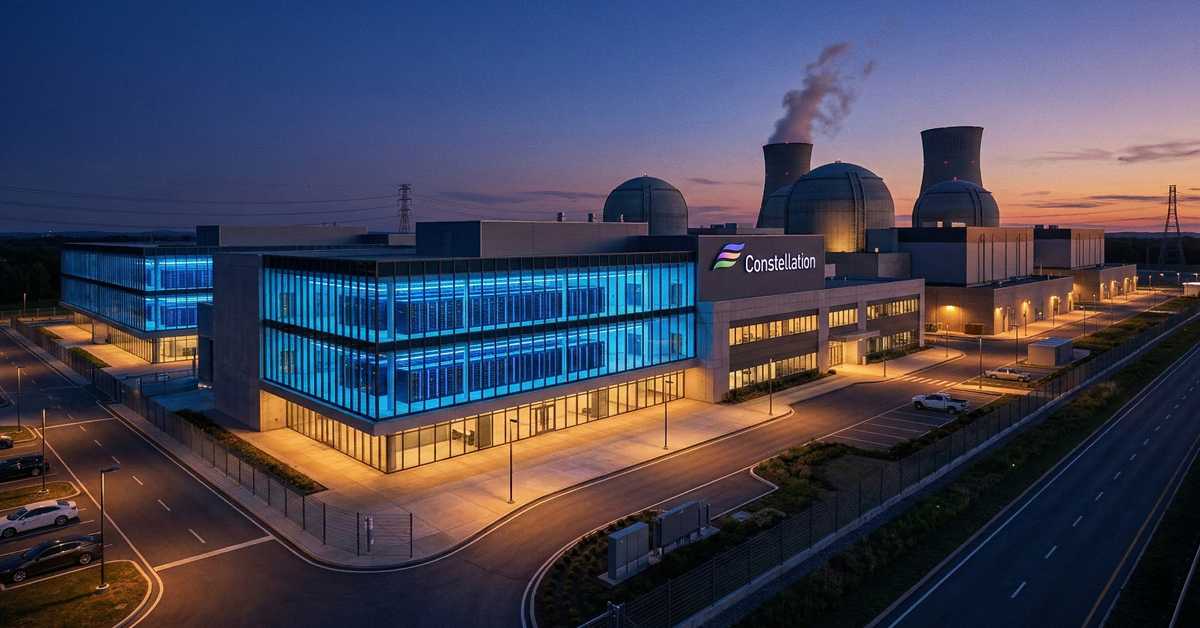
Constellation Energy (NASDAQ: CEG) has emerged as the premier beneficiary and quintessential Energy Aristocrat of this trend. Operating as the largest producer of clean, emission-free baseload power in the United States, Constellation generates approximately 10% of America’s emission-free electricity through its vast fleet of nuclear, hydroelectric, wind, and solar plants. Recognizing Constellation’s unique scale, Microsoft executed a historic, 20-year power purchase agreement (PPA) with the company.
This agreement physically resurrects Unit 1 of the infamous Three Mile Island facility in Pennsylvania, comprehensively rebranding it as the Crane Clean Energy Center. Under the terms of this extraordinary PPA—supported by a $1 billion government loan—Microsoft is projected to pay an immense premium, estimated between $110 and $115 per megawatt-hour (MWh) over two decades, to guarantee a dedicated, behind-the-meter nuclear power supply. Shortly after this landmark deal, Meta Platforms signed a similar 20-year agreement with Constellation to draw dedicated power from the Clinton Clean Energy Center in Illinois.
This unprecedented pricing power has fundamentally transformed Constellation’s financial trajectory. Once viewed as a slow-growth, regulated utility, Constellation is now a highly coveted, structural growth infrastructure play. The company is projecting an adjusted operating earnings growth of over 13% through the end of the decade, with estimated 2025 earnings per share (EPS) rising to $9.39, up from $8.67 in 2024. Analysts forecast CEG’s 2026 earnings to reflect year-over-year growth of 18.8%, with long-term EPS growth pegged at a robust 12.46%.
Similarly, NextEra Energy (NYSE: NEE) has partnered with Alphabet (Google) to bring the Duane Arnold Energy Center in Iowa back online. This dedicated facility will supply firm power directly to Google’s expanding cloud infrastructure. Driven by these lucrative nuclear contracts, NextEra anticipates a 13% increase in adjusted EPS for 2025, maintaining a highly attractive 8% compound annual growth rate (CAGR) over the next decade.
Vistra Corp (NYSE: VST), another dominant merchant power producer, has seen significant upward revisions in its forward earnings estimates. While facing a transitional year in 2025, Vistra’s earnings are projected to exhibit year-over-year growth of 26.2% into 2026, with a staggering long-term earnings growth rate pegged near 21.75%. These independent power producers, unburdened by the strict rate-base regulations that constrain traditional monopolistic utilities, are free to sign highly lucrative, bilateral contracts directly with hyperscalers, extracting massive financial premiums for the sheer scarcity of their firm generating capacity. The OBBBA’s retention of the Nuclear Tax Credit (Section 45U), alongside a new energy community bonus credit for advanced nuclear facilities, further subsidizes the profitability of these Energy Aristocrats.
Natural Gas as the Indispensable Bridge
While nuclear power commands the headlines and captures the imagination of the market, the deployment timelines for bringing legacy nuclear plants back online are lengthy and complex. Furthermore, the highly anticipated deployment of Small Modular Reactors (SMRs)—which companies like X-energy and NuScale are developing in partnership with hyperscalers like Amazon—is constrained by regulatory approvals and is not expected to reach commercial scale until closer to 2030 or beyond. Therefore, nuclear power cannot mathematically solve the immediate, acute power deficits of 2026 and 2027.
Consequently, natural gas has been elevated to the role of the vital, indispensable near-term bridge for firm, on-site power generation. Natural gas turbines can be deployed rapidly, with construction and commissioning timelines ranging from 18 to 24 months, perfectly mirroring the rapid construction schedule of a modern AI data center. The OBBBA’s rollback of stringent environmental penalties has further incentivized the integration of natural gas microgrids.
By deploying massive natural gas generators, combined with fuel cells (such as those provided by Bloom Energy) and on-site energy storage, data center operators can completely decouple from the macro-grid when local utility interconnection queues stretch beyond five to seven years. This dynamic creates a secondary, highly profitable class of Energy Aristocrats among midstream natural gas pipeline operators (such as Williams Companies) and gas-heavy independent power producers, whose infrastructure is now explicitly recognized as a critical, non-negotiable vector of the global AI supply chain.
The Valuation Nexus: Utility Sector and AI Data Center REITs
The intense gravitational pull of AI’s energy requirements has precipitated a historic and highly profitable convergence between the broader Utility sector (tracked by ETFs such as XLU) and Real Estate Investment Trusts (REITs) specializing in digital infrastructure.
Historically, utilities were categorized strictly as defensive, bond-proxy investments, prized by conservative investors for their stable dividend yields rather than any meaningful capital appreciation. However, the AI-driven electricity demand supercycle has fundamentally re-rated the entire sector, transforming sleepy, old-economy utilities into aggressive, structural growth vehicles.
The United States electric utility industry is projected to invest over $1.1 trillion in capital expenditures by 2030 simply to upgrade basic grid capacity and essential interconnection infrastructure. This massive capital deployment automatically expands the utility “rate base.” Under traditional regulatory frameworks, an expanding rate base provides utilities with undeniable, legally protected justification to seek rate hikes from local public utility commissions. When regulators inevitably approve these necessary rate increases to prevent grid failure, the utility’s forward earnings and dividend forecasts rise concurrently, providing a powerful, structural boost to their stock prices.
This dynamic has triggered a massive, sustained rotation of institutional capital into utility equities and ETFs. The sector consistently outperformed the broader S&P 500 throughout 2024 and 2025, shedding its defensive reputation. Even amid high interest rates, top utility stocks are positioned for robust earnings and dividend growth through 2026 and 2027, driven purely by the necessity of electrification and the insatiable demand from data centers.
Redefining Commercial Real Estate: Underwriting Megawatts
Simultaneously, the commercial real estate (CRE) sector is undergoing a profound, systemic bifurcation. While traditional office, multifamily apartment, and retail properties languish under the weight of macroeconomic volatility, high debt costs, and depressed valuations, Data Center REITs—such as Equinix (NASDAQ: EQIX) and Digital Realty Trust (NYSE: DLR)—are experiencing an unprecedented, secular investment boom.
The valuation logic for these specific, highly specialized REITs has been completely overhauled by the AI revolution. Historically, appraisers and private equity firms valued data centers using traditional industrial real estate metrics: evaluating rent per square foot, tracking tenant diversification, and assessing geographic location. Today, that traditional “sticks and bricks” methodology is entirely obsolete. Institutional investors and hyperscale tenants are now exclusively underwriting megawatts. The entire income and valuation model has normalized around a new, power-centric metric: dollars per kilowatt per month.
Power assurance, rather than geographic proximity to urban fiber backbones, has become the paramount variable dictating leasing rates and underlying asset values. Data center REITs that successfully secure long-term Power Purchase Agreements (PPAs) or manage to navigate the multi-year wait times for firm grid interconnections hold absolute, unassailable negotiating leverage over their hyperscale tenants. With global data center occupancy rates hovering near 97%, landlords can command massive rent premiums, and significant rent growth is virtually guaranteed through 2030.
Because multi-year wait times for grid connections are the new industry norm, existing facilities with guaranteed power are functionally irreplaceable, highly moated assets. This extreme power scarcity has driven Data Center REITs to produce double-digit year-over-year growth in Funds From Operations (FFO) and Net Operating Income (NOI), massively outpacing traditional real estate indices. Over the five years ending December 2024, data center REITs produced a 77% total return, vastly outperforming the broader MSCI US REIT Index. In 2026, as the “Power Wall” fully materializes, this divergence will only accelerate. Investors recognizing the valuation gap between traditional private real estate and listed digital infrastructure are pouring billions into specialized data center growth funds.
The Financial Engineering of the Data Center Boom
The scale of the infrastructure required is so vast that it is reshaping global credit and private equity markets. McKinsey & Co. estimates that $7 trillion will be spent in total across the digital infrastructure ecosystem by the end of the decade, with $5.2 trillion needed for data centers alone. This equates to the combined GDP of Japan and Germany.
Asset managers who specialize in infrastructure investing and private debt financing are aggressively capitalizing on this demand. For example, Meta selected Blue Owl Capital and PIMCO for $29 billion in financing for a single data center project in Louisiana, while Nuveen raised $1.3 billion for a dedicated energy and power infrastructure credit fund. Institutional investors are allocating heavily to this sector because it sits at the exact, highly profitable intersection of two powerful long-term trends: the rapid digitalization of the global economy via AI, and the massive, capital-intensive overhaul of the global electrical grid.
Strategic Conclusions and Future Outlook
The transition into the latter half of the decade confirms that the second phase of the artificial intelligence revolution is inherently a physical infrastructure and energy challenge. The evidence definitively points toward several structural realities that will dictate capital flows and market leadership through 2030:
- The Sovereignty of Baseload Power: The ideological pursuit of a purely renewable, intermittent grid has been superseded by the harsh mathematical realities of AI inference workloads. The continuous, high-density power requirements of gigawatt-scale data centers guarantee the long-term profitability of the “Energy Aristocrats.” Nuclear operators like Constellation Energy (NASDAQ: CEG) and NextEra Energy (NYSE: NEE), alongside merchant natural gas providers like Vistra Corp (NYSE: VST), possess an unparalleled, virtually impenetrable economic moat. Their ability to execute bilateral, premium-priced take-or-pay contracts directly with hyperscale tech monopolies entirely insulates their forward earnings from traditional commodity cyclicality and regulatory interference.
- The Deflation of Silicon vs. The Inflation of Electrons: While the semiconductor industry will eventually resolve its micro-level packaging and memory bottlenecks, the physical macro-grid cannot be rapidly scaled due to severe supply chain deficits. Specifically, the acute shortage of large power transformers—with lead times stretching to four years—acts as a physical speed limit on AI deployment. Consequently, the premium in the AI value chain is actively shifting away from those who manufacture the processing chips to those who control the raw electrical power required to cool and operate them.
- The Weaponization of Rate Design: The political backlash surrounding rising residential utility bills will intensify as the grid requires over a trillion dollars in upgrades to support hyperscale expansion. Investors must closely monitor local Public Utility Commissions (PUCs). Jurisdictions that adopt aggressive, data-center-specific tariffs—similar to the precedent set by AEP Ohio—will force AI operators to shoulder the capital risk via rigid take-or-pay contracts. Conversely, areas that attempt to socialize these massive infrastructure costs will face severe regulatory blowback, potentially stranding assets and severely penalizing traditional utility valuations.
- Real Estate Re-Underwriting: The valuation metrics of Data Center REITs will continue to violently decouple from broader commercial real estate trends. A facility’s intrinsic value is now irrevocably linked to its secured megawatt capacity rather than its geographic location or physical square footage. REITs with pre-existing, firm interconnections or behind-the-meter generation solutions will command extraordinary pricing power as hyperscalers bid fiercely for scarce, energized racks.
- Permitting Reform is a Capital Catalyst, Not a Panacea: While ambitious legislative efforts like the One Big Beautiful Bill Act (OBBBA) attempt to compress NEPA review timelines via premium fee-for-speed structures, they fundamentally fail to address the underlying physical shortages of heavy electrical components. Therefore, the most immediate and asymmetric Alpha in the infrastructure sector belongs to companies aggressively deploying Grid-Enhancing Technologies (GETs) and advanced composite reconductoring. These technologies bypass the need for new permitting and new transformers entirely by maximizing the thermal throughput of the existing grid infrastructure.
The artificial intelligence era has unequivocally restored heavy physical infrastructure, thermodynamic engineering, and raw power generation to the absolute pinnacle of global economic importance. The technological ceiling of artificial intelligence in 2026 and beyond will not be dictated by algorithmic limitations, coding ingenuity, or silicon architecture, but by the immutable physical laws of thermodynamics and the finite capacity of the electrical grid. As capital markets fully internalize this reality, the flow of investment will continue to heavily, and disproportionately, reward the utilities, Data Center REITs, and independent power producers capable of delivering the ultimate, most scarce commodity of the 21st century: continuous, reliable electrons.