
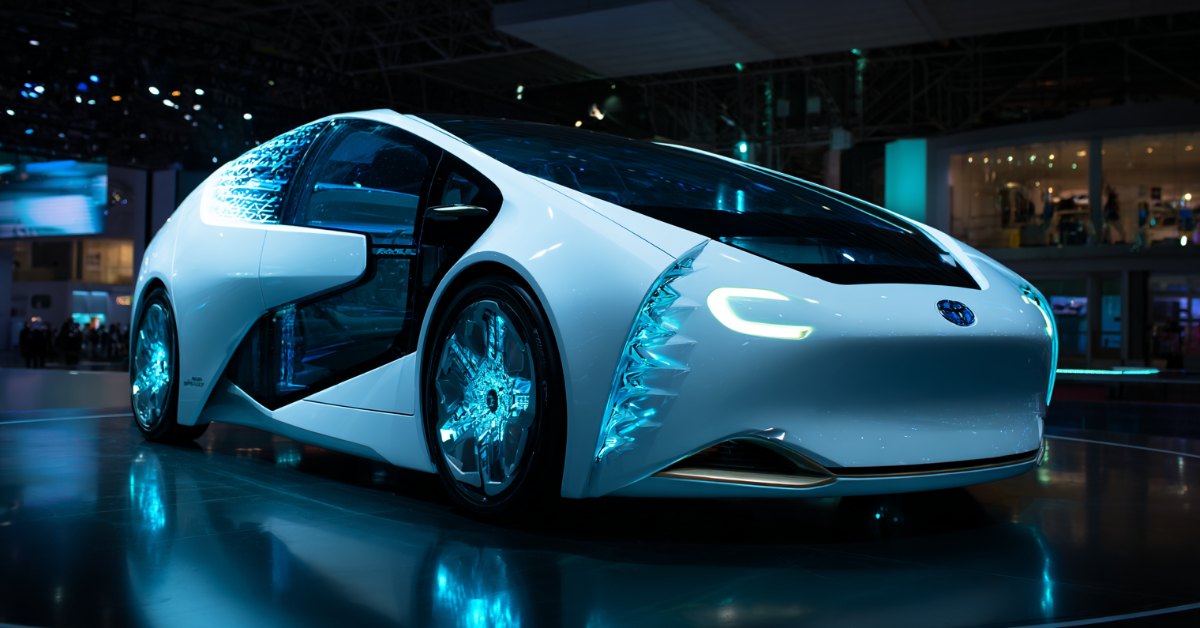
Toyota Motor Corporation (NYSE: TM) is executing a strategic pivot to aggressively compete in the Battery Electric Vehicle (BEV) market, moving past its initial reluctance and slow start. The company’s core strategy remains a “multi-pathway” approach that leverages its existing hybrid leadership while accelerating advanced BEV technology to challenge the market leaders.
Table of Contents
Toyota’s Initiatives and Future Roadmap in the EV Market
Toyota’s strategy is built on overcoming its initial technological lag by focusing on next-generation manufacturing and battery advancements:
- Ambitious Volume Targets and Expanded Lineup:
- Toyota plans to launch 15 new EV models by 2027 and aims for 1.5 million annual global EV sales by 2026, increasing to 3.5 million by 2030.
- The lineup expansion includes the Beyond Zero (bZ) family (e.g., the existing bZ4X and the upcoming three-row bZ5X SUV), as well as electric versions of core nameplates like the Land Cruiser, RAV4, and Tacoma.
- Next-Generation Battery Technology (The ‘Ace’):
- The company is making a major investment in solid-state batteries, which it views as a potential game-changer. Toyota expects limited production to begin by 2027 or 2028, promising vastly improved metrics like a 750-mile (1,200 km) range and 10-minute charging times if successful.
- In the nearer term (by 2026), Toyota is introducing a new performance lithium-ion battery with a promised range of over 800 km (500 miles) and a charge time of under 20 minutes (10% to 80%).
- Advanced Manufacturing Techniques:
- Toyota is adopting gigacasting—a process similar to what Tesla uses—to produce major vehicle underbody parts in minutes, significantly reducing manufacturing complexity, cost, and time. This high-efficiency manufacturing is critical for volume scaling.
- The development of an all-new dedicated BEV platform (separate from the e-TNGA used for the bZ4X) is underway, optimizing components like batteries and platforms exclusively for electric performance.
- The Multi-Pathway Approach: Toyota continues to invest heavily in a diversified approach, which includes Hybrids (HEVs), Plug-in Hybrids (PHEVs), and Hydrogen Fuel Cells (FCEVs) (e.g., the Mirai). The company argues this approach maximizes CO2 reduction by offering options that suit diverse regional infrastructure and consumer needs.
Major Competitors in the EV Market
Toyota faces a highly fragmented and dynamic competitive landscape in the global EV market, categorized into three main groups:
- The Global BEV Dominators:
- Tesla (NASDAQ: TSLA): The current benchmark for brand recognition, software, and charging ecosystem leadership, particularly in the U.S. and Europe.
- BYD Company Ltd. (HKG: 1211, OTC: BYDDY): The global volume leader, commanding the largest market share, driven by aggressive pricing and a strong battery technology advantage, particularly in China and emerging markets.
- Traditional Auto Giants and Korean Challengers:
- Volkswagen Group (FWB: VOW): Strong in Europe with a wide portfolio (VW ID.4, Audi, Porsche).
- Hyundai Motor Group (KRX: 005380) / Kia (KRX: 000270): Highly competitive with efficient 800-volt platforms, fast charging, and standout designs (IONIQ 5/6, EV6/EV9).
- Ford (NYSE: F) and General Motors (NYSE: GM): Focusing on high-volume, profitable segments like electric trucks and SUVs (F-150 Lightning, Chevy Blazer/Equinox EV).
- New Chinese and Premium Entrants:
- Geely (including Volvo and Polestar): Growing global market share through premium and design-forward brands.
- Other Chinese Makers (NIO, XPeng, Li Auto): Pushing software, battery-swapping, and high-tech features.
Toyota’s EV Performance So Far
Toyota’s performance in the pure BEV segment (Battery Electric Vehicles) has been notably slow compared to its major rivals, but its performance in the broader “electrified” segment remains dominant:
- BEV Market Share (Lagging): Globally, Toyota’s BEV sales volume remains small. For instance, in 2024, Toyota sold approximately 140,000 BEVs globally, a figure significantly lower than Tesla’s 1.76 million or BYD’s 4.27 million plug-in vehicles. Its share of the global BEV market is often less than 1%.
- “Electrified” Sales (Dominant): The company’s strength lies in its long-standing lead in Hybrids (HEVs) and Plug-in Hybrids (PHEVs). In North America and Europe, electrified vehicles (Hybrids, PHEVs, and BEVs combined) represented nearly 50% of its total sales volume in the second quarter of 2025. This massive hybrid volume—the “multi-pathway” success—has allowed Toyota to meet stringent emissions standards without fully committing to BEVs until recently.
- First Models and Challenges: The first mass-market BEV, the bZ4X, received mixed reviews, particularly concerning initial charging performance and range consistency in cold weather. Toyota has responded with a refresh for 2025 to address these issues, improving charging speeds and battery efficiency.
In summary, Toyota is currently a laggard in pure BEV volume, but it is using its hybrid profits and strong brand loyalty to fund a massive, high-stakes bet on advanced battery technology (solid-state) and next-generation manufacturing (gigacasting). Its success in the second half of the decade hinges on the timely and successful deployment of these technological leaps to compete directly with the range and charging speeds offered by the current market leaders.