
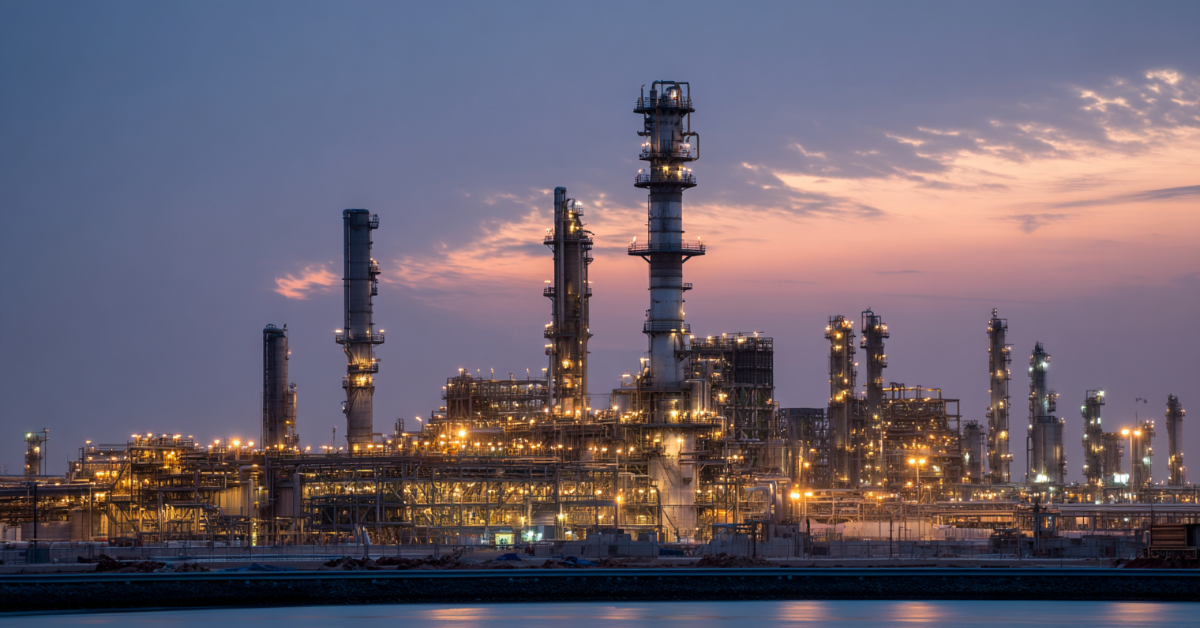
As the global energy landscape undergoes a structural shift toward electrification and decarbonization, the Saudi Arabian Oil Co. (Aramco) faces a pivotal challenge: maintaining its status as the world’s most profitable entity while the internal combustion engine (ICE) yields market share to electric vehicles (EVs). However, a review of the 2025 fiscal year suggests that Aramco is not merely surviving the transition but is actively engineering a future where it remains indispensable.
Table of Contents
2025 Performance Review: Financial Stability Amidst Volatility
Aramco’s performance in 2025 was defined by operational efficiency and a robust dividend policy that shielded investors from broader market headwinds. Despite a softening in global crude prices during the second quarter, which saw realized prices dip to approximately $66.7 per barrel, the company demonstrated remarkable recovery by the third quarter.
- Net Income and Cash Flow: In Q3 2025, Aramco reported an adjusted net income of $28.0 billion, a slight increase from the previous year. More importantly, free cash flow surged to $23.6 billion, underpinned by a gearing ratio that remains exceptionally low at 6.3%.
- Dividend Resilience: Throughout 2025, Aramco maintained its commitment to shareholders, distributing over $64 billion in base and performance-linked dividends in the first nine months alone. This yield, often hovering between 5.5% and 6.0%, continues to be a primary magnet for institutional capital.
- Gas Expansion: A critical highlight of 2025 was the upward revision of gas production targets. Aramco now aims for an 80% increase in sales gas production capacity by 2030 (relative to 2021 levels), driven largely by the unconventional Jafurah field expansion.
Strategic Adaptation: Profiting Beyond Crude Oil
To address the threat posed by EVs and clean energy, Aramco is diversifying its revenue streams through three primary pillars: blue hydrogen, carbon capture, and downstream chemicals.
The Hydrogen and CCUS Pivot
In 2025, Aramco moved from pilot projects to commercial-scale execution. The acquisition of a 50% stake in the Blue Hydrogen Industrial Gases Company (BHIG) marked a major milestone. By leveraging its existing natural gas infrastructure and its emerging Carbon Capture, Utilization, and Storage (CCUS) hub in Jubail, Aramco is positioning itself to be a leading exporter of low-carbon ammonia to markets in Europe and Asia.
Petrochemical Integration
Aramco’s “Crude-to-Chemicals” strategy serves as a hedge against declining transport fuel demand. In 2025, the company finalized significant agreements, including the establishment of the Fujian Sinopec Aramco Refining & Petrochemical complex, ensuring that even if oil is not burned in engines, it remains the foundational building block for global manufacturing.
2026 Investment Outlook: Buy, Hold, or Sell?
As we enter 2026, the investment thesis for Saudi Aramco (Tadawul: 2222) rests on its role as a “defensive growth” play. While the transition to EVs is accelerating, global demand for hydrocarbons is projected to remain substantial for several decades to meet industrial and emerging market needs.
| Indicator | 2026 Projection | Impact on Stock |
|---|---|---|
| Dividend Yield | 5.4% – 5.8% | Highly Positive |
| Capital Expenditure | $48B – $52B | Neutral (Growth Focus) |
| Target Price Range | SAR 36 – 45 | Moderate Upside |
Buy Recommendation for 2026
Aramco is recommended as a Buy for income-oriented investors and a Hold for growth seekers. The rationale is based on the following factors:
- Lowest Cost of Production: With lifting costs significantly below global peers, Aramco remains profitable even in lower-price environments where Western majors might struggle.
- Energy Transition Leadership: The company’s aggressive moves into blue hydrogen and digital infrastructure (e.g., the HUMAIN AI investment) provide a viable path to long-term sustainability.
- Reliability: In a world of geopolitical uncertainty, Aramco’s spare capacity and operational flexibility offer a premium that few other equities can match.
The primary risks to this outlook include faster-than-anticipated EV adoption in China and the United States, and potential volatility in OPEC+ production quotas. However, for 2026, Aramco’s balance sheet strength and strategic pivot make it a cornerstone asset for any energy-focused portfolio.