
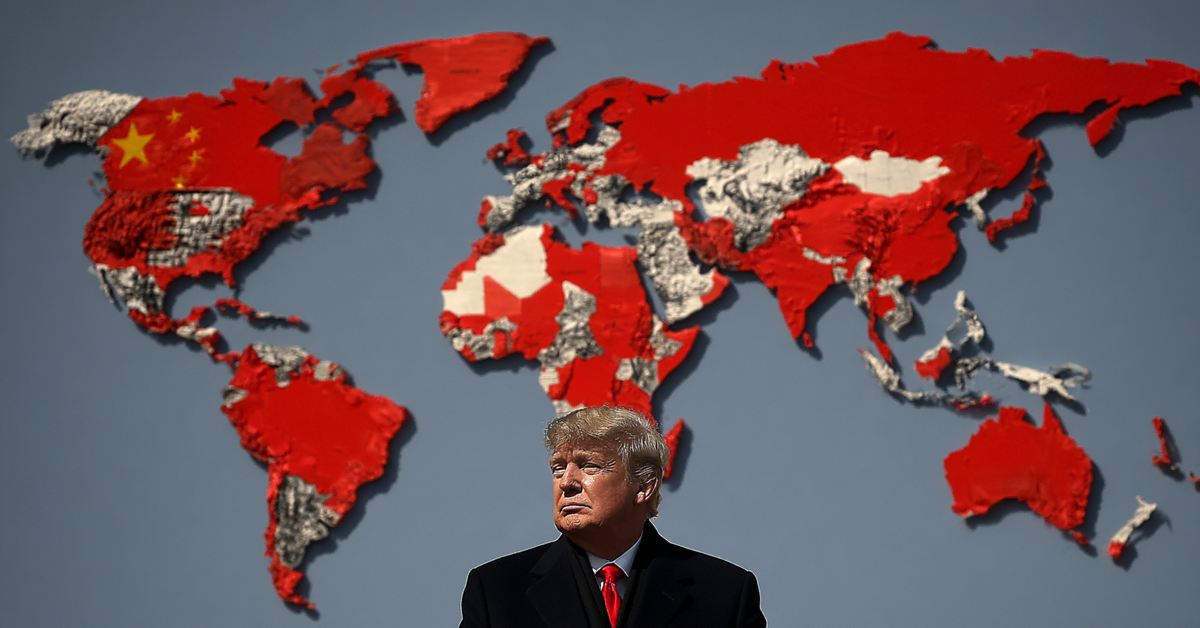
In a definitive rebuff to aggressive protectionist measures, China concluded 2025 with a historic trade surplus of approximately $1.2 trillion. This milestone represents the largest annual trade surplus ever recorded by a single nation, highlighting a profound shift in global trade dynamics. Despite the escalation of tariffs under the second Trump administration, Chinese manufacturers demonstrated unprecedented agility, pivoting away from the North American market to cement dominance in the Global South and Europe.
Table of Contents
The Statistical Landscape of 2025
China’s total exports for 2025 reached approximately $3.77 trillion, a 5.5% increase year-on-year. This growth was particularly notable in the fourth quarter, where December exports surged by 6.6%, consistently outperforming analyst expectations. Conversely, imports remained largely stagnant, flatlining at approximately $2.58 trillion for the full year. This divergence—robust outbound shipments paired with tepid inbound demand—expanded the trade surplus by nearly 20% compared to the 2024 figure of $992 billion.
The scale of this surplus is equivalent to the total GDP of a top-20 global economy. For perspective, the monthly surplus exceeded $100 billion in seven individual months during 2025, a frequency never before seen in the era of modern trade.
Drivers of Resilience: Beyond the US Market
While US-bound shipments plummeted by approximately 20% in 2025 due to duties reaching as high as 47.5%, the “Trump Shock” failed to derail the Chinese export engine. Instead, it catalyzed a massive redirection of trade flows.
Geographic Diversification
Chinese exporters successfully mitigated losses in the US by expanding their footprint in alternative regions. Growth in these markets not only filled the vacuum left by the US but expanded the total export volume:
- Africa: Exports surged by 26%, driven by infrastructure projects and consumer electronics.
- ASEAN: Shipments jumped 13.4%, as Southeast Asia became a critical hub for both final consumption and intermediate processing.
- India: Despite geopolitical friction, trade grew by 12.8%, particularly in semiconductors and components for localized assembly.
- European Union: Exports rose by 8.4%, primarily fueled by green technology and automotive products.
- Latin America: Grew by 7.4%, supported by the rapid expansion of e-commerce platforms like Temu and Shein.
Manufacturing and Value-Chain Evolution
China’s surplus is no longer built solely on low-cost textiles and toys. The 2025 data reveals a decisive move up the value chain. Key high-growth sectors included:
- Automotive: Total vehicle exports jumped 19.4% to over 7 million units. Pure electric vehicle (EV) shipments surged nearly 49%, maintaining China’s position as the world’s top auto exporter.
- Semiconductors: Exports of chips, particularly legacy chips used in appliances and cars, rose by 26.8%.
- Green Technology: Solar panels and lithium-ion batteries remained dominant, despite increased scrutiny and countervailing duties in Western markets.
Structural Imbalances and Domestic Challenges
The record surplus is as much a symptom of domestic weakness as it is of export strength. The flat growth in imports reflects a prolonged property market downturn and cautious consumer behavior within China. The collapse of the housing-wealth effect has led many Chinese households to prioritize savings over consumption, reducing the demand for foreign luxury goods, commodities, and industrial machinery.
Furthermore, Beijing’s long-standing industrial policy of “import substitution” has matured. Domestic brands are increasingly replacing foreign counterparts in sectors ranging from smartphones to heavy machinery, further suppressing import figures and widening the trade gap.
Economic and Geopolitical Implications
The $1.2 trillion surplus has intensified global concerns regarding “overcapacity.” As Chinese goods flood international markets at competitive prices, other nations are facing pressure to protect their own industrial bases. While Mexico and Turkey have already moved to impose significant tariffs, many countries in the Global South remain hesitant to retaliate, fearing the loss of Chinese investment and affordable technology.
Currency dynamics also played a role. A relatively weak Yuan (Renminbi) throughout 2025 boosted the competitiveness of Chinese goods. However, the sheer size of the surplus has led international institutions, including the IMF, to call for a rebalancing of China’s growth model toward domestic demand to avoid a “race to the bottom” in global manufacturing prices.
Outlook for 2026
As 2026 begins, China faces a “severe and complex” external environment. While the export engine remains a primary driver of growth, the risk of a synchronized global protectionist response is rising. Analysts expect export growth to moderate to approximately 3% in 2026, yet the trade surplus is projected to remain comfortably above the $1 trillion mark as domestic demand recovery remains gradual. The enduring lesson of 2025 is that while tariffs can bend trade flows, they have yet to break the structural dominance of the Chinese manufacturing apparatus.