
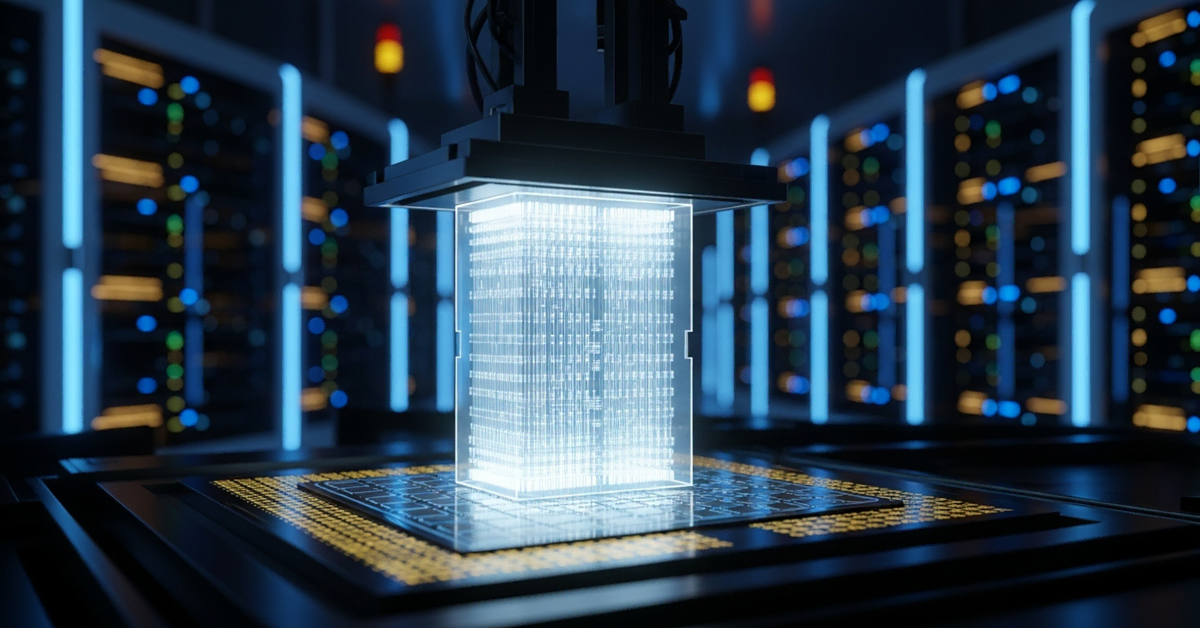
For decades, the semiconductor industry was defined by the “Silicon Cycle”—a volatile see-saw of oversupply and price crashes followed by frantic capacity expansion. However, as of early 2026, the industry has entered a “Rare Era of Scarcity.” SK Hynix (KRX: 000660), the world’s leading provider of High Bandwidth Memory (HBM), has officially signaled that its production capacity for HBM, and much of its advanced DRAM and NAND, is fully committed through the end of 2026. This is not merely a temporary bottleneck; it is the dawn of a new semiconductor paradigm.
Table of Contents
The Death of the Traditional Silicon Cycle
In previous cycles, memory was treated as a commodity. Manufacturers would build massive “fab” shells and flood the market with standardized chips, leading to periodic gluts. Today, the demand for Artificial Intelligence (AI) has transformed memory from a commodity into a bespoke, mission-critical component. SK Hynix’s sold-out status through 2026 reflects a structural shift toward “Volume Purchase Agreements” (VPAs), where hyperscalers like NVIDIA, Microsoft, and Google secure capacity years in advance to ensure their AI roadmaps remain viable.
The HBM Stranglehold: From HBM3E to HBM4
The primary driver of this scarcity is High Bandwidth Memory. SK Hynix currently commands over 50% of the HBM market, fueled by its dominant position as the primary supplier for NVIDIA’s Blackwell and upcoming Rubin platforms. The transition from 12-layer HBM3E to the next-generation HBM4 has created a technical “moat” that is difficult for competitors to cross.
- Complex Manufacturing: HBM4 requires advanced 3D stacking and TSV (Through-Silicon Via) technology, which reduces overall wafer yield compared to standard DDR5 memory.
- Capacity Displacement: Producing one bit of HBM requires roughly 2 to 3 times the wafer capacity of standard DRAM. As SK Hynix pivots more capacity to HBM, it creates a secondary shortage in the general-purpose server and consumer markets.
- Customization: HBM4 is increasingly becoming semi-custom, with logic layers being integrated directly onto the memory stack in collaboration with foundries like TSMC, making production slots even more rigid.
Financial Fortification and Market Impact
The “sold-out” signal provides SK Hynix with unprecedented revenue visibility. In its latest fiscal reports for 2025, the company posted record-high operating profits, frequently exceeding 10 trillion won per quarter. This financial strength allows for massive capital expenditure—projected at over 70 trillion won for the 2025-2027 period—to build new facilities like the M15X fab in Korea and advanced packaging plants in the United States.
| Metric | Impact of 2026 Scarcity |
|---|---|
| ASP (Average Selling Price) | Projected to remain at premium levels with double-digit growth in DDR5 and HBM. |
| Inventory Levels | DRAM inventory remains at “critical lows” (under 2 weeks) for high-end server modules. |
| Customer Behavior | Shift from quarterly bidding to multi-year supply guarantees. |
The Ripple Effect: Winners and Losers
The scarcity at SK Hynix has created an asymmetric market. While SK Hynix and its primary partner, NVIDIA, benefit from locked-in supply chains, other sectors are feeling the “memory tax.”
PC and Smartphone OEMs: Traditional hardware manufacturers (Dell, Lenovo, Xiaomi) are facing 30-60% price hikes for memory components. This is leading to “specification downgrades,” where 2026 flagship devices may ship with less RAM than originally planned to maintain price points.
The “Dual 100 Trillion” Era: Analysts now project that the combined operating profits of SK Hynix and Samsung could exceed 200 trillion won in 2026, a figure that would represent a significant portion of the South Korean government’s entire budget, highlighting the geopolitical and economic weight of the memory sector.
Strategic Conclusion: A Locked-In Future
The 2026 “sold-out” signal from SK Hynix is a clear indicator that the semiconductor industry has moved from a “just-in-time” model to a “just-in-case” model. For investors and industry stakeholders, the message is clear: the bottleneck is no longer the processor, but the memory that feeds it. As long as the AI infrastructure build-out continues, the era of scarcity will define the winners of the silicon age.