
Table of Contents
Executive Summary
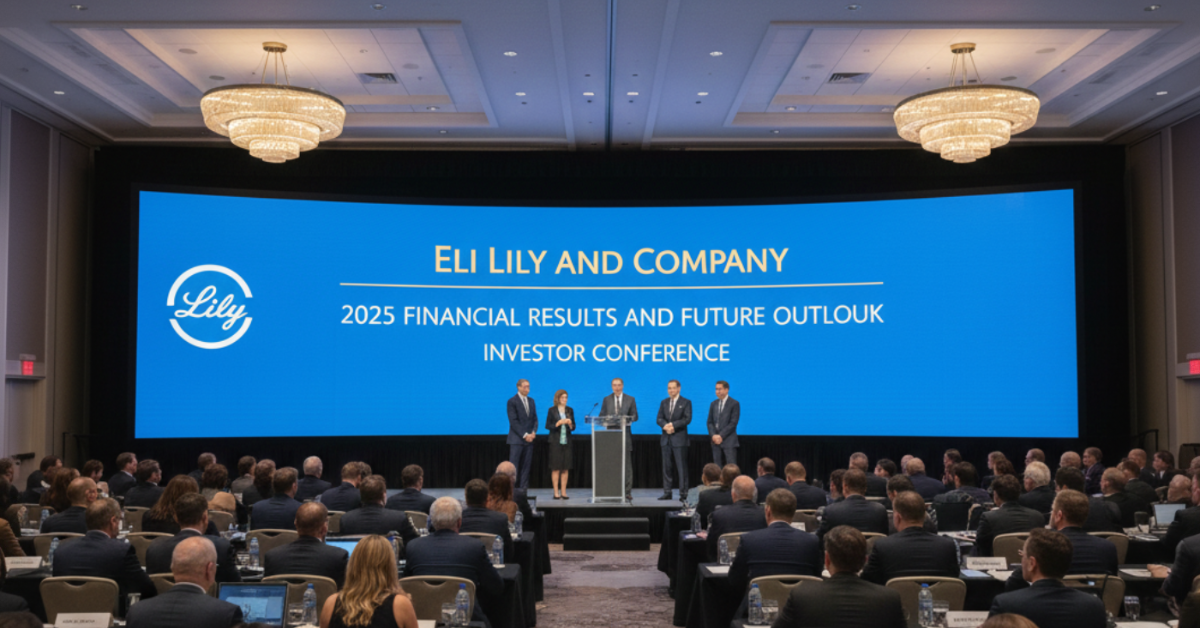
In 2025, Eli Lilly and Company (NYSE: LLY) solidified its position as a global titan in the pharmaceutical industry, briefly surpassing a $1 trillion market capitalization. Driven by the unprecedented success of its incretin franchise, the company achieved record revenue growth and expanded its footprint in cardiometabolic health. As 2026 approaches, Lilly is transitioning from a period of pure demand fulfillment to one of strategic diversification and defense. This white paper analyzes the financial milestones of 2025 and the proactive measures the company is taking to navigate upcoming competition, pricing pressures, and manufacturing requirements.
2025 Financial Performance Analysis
The 2025 fiscal year was characterized by triple-digit growth in key product segments. The company’s focus on tirzepatide, marketed as Mounjaro for diabetes and Zepbound for obesity, transformed its financial profile.
Key Revenue Drivers
- Incretin Dominance: In the third quarter of 2025 alone, revenue surged 54% year-over-year to $17.6 billion. Combined sales of Mounjaro and Zepbound exceeded $10 billion in a single quarter, reflecting the massive scale of the obesity and type 2 diabetes markets.
- Margin Excellence: Lilly maintained a best-in-class gross margin of approximately 83.6%, bolstered by a favorable product mix and optimized production processes.
- International Expansion: Non-U.S. revenue grew by 74%, indicating successful market entry in Europe and Asia, where demand for metabolic treatments followed the aggressive trajectory seen in the United States.
Market Valuation and Investor Sentiment
By late 2025, Eli Lilly’s stock price consistently traded above $1,000 per share. While its forward Price-to-Earnings (P/E) ratio remained high at approximately 32x—significantly above the healthcare industry average—investors continued to reward the company for its robust earnings per share (EPS) growth, which was revised upward to a range of $23.00 to $23.70 on a non-GAAP basis for the full year.
Strategic Preparation for 2026
Despite the successes of 2025, the 2026 outlook presents a more complex landscape. Eli Lilly is preparing for these shifts through a three-pronged strategy: pipeline evolution, manufacturing scale, and regulatory diplomacy.
1. Pipeline Evolution and Product Launches
Lilly is moving to protect its market share against emerging competitors like Novo Nordisk, Pfizer, and various biotech startups by launching next-generation therapies.
- Orforglipron: This once-daily oral GLP-1 is a cornerstone of the 2026 strategy. By offering a non-injectable alternative, Lilly aims to capture a broader patient demographic and bypass the “needle fatigue” associated with current treatments. Regulatory filings submitted in late 2025 position it for a high-impact launch in early 2026.
- Retatrutide: Known as the “triple agonist” (targeting GLP-1, GIP, and glucagon), retatrutide is expected to release pivotal Phase 3 data in the second half of 2026. Preliminary trials showed weight loss efficacy approaching 29%, a figure currently unmatched in the industry.
- Oncology and Neuroscience: Beyond metabolic health, Lilly is scaling Inlurio for breast cancer and Kisunla for Alzheimer’s disease to diversify revenue streams and mitigate the risk of over-reliance on a single therapeutic class.
2. Massive Infrastructure Investment
One of the primary challenges in 2025 was meeting global demand. To prevent supply-chain bottlenecks from limiting 2026 growth, Lilly has committed over $27 billion to manufacturing expansions.
- New Facilities: Major projects in Indiana, North Carolina, and Germany are coming online to increase the production of active pharmaceutical ingredients (API) and injectable devices.
- Resilience: The company is shifting its supply chain to reduce dependence on single-source suppliers, particularly those affected by geopolitical tensions, ensuring a more stable distribution network for 2026.
3. Regulatory and Pricing Strategy
The political environment in 2025 introduced new variables in drug pricing. Eli Lilly has taken a proactive stance to secure its market position.
- Government Agreements: In late 2025, Lilly entered into voluntary agreements with the U.S. government to expand access to obesity medications for Medicare and Medicaid beneficiaries. This move, while potentially impacting realized prices per unit, significantly expands the total addressable market (TAM) by tens of millions of patients.
- Stock Split Speculation: With shares trading near all-time highs, analysts anticipate a stock split in 2026. Such a move would aim to increase liquidity and make the stock more accessible to retail investors following the massive valuation gains of the previous year.
Risk Assessment for 2026
While the outlook is overwhelmingly positive, several risks remain under observation by the research team:
- Competitive Entrants: Oral candidates from competitors like Structure Therapeutics and Viking Therapeutics could challenge Lilly’s dominance if they demonstrate superior tolerability or ease of manufacture.
- Patent Expirations: While Lilly’s core growth drivers are protected, other legacy products face “patent cliffs” that require the new pipeline to over-deliver to maintain top-line growth.
- Macroeconomic Pressures: Changes in healthcare policy or broader economic downturns could affect consumer spending and insurance coverage for high-cost weight-loss treatments.
Conclusion
Eli Lilly and Company enters 2026 as the undisputed leader in the cardiometabolic space. Its 2025 performance provided the capital necessary to build a nearly insurmountable manufacturing and R&D moat. By anticipating the shift toward oral medications and proactively engaging with government payers, Lilly has positioned itself to maintain double-digit growth even as the market matures and competition intensifies.