
Table of Contents
The Transformation of Accelerated Computing: A Global Infrastructure Shift
The global technology landscape as of early 2026 is defined by a singular structural transformation: the transition from general-purpose computing to accelerated, AI-centric infrastructure. At the heart of this transition lies NVIDIA Corporation, a firm that has evolved from a manufacturer of specialized graphics hardware into the foundational utility of the modern digital economy. The company’s recent financial performance, particularly its results for the third quarter of fiscal 2026, underscores a trajectory that is not merely cyclical but represents a fundamental re-architecting of how information is processed and intelligence is generated.
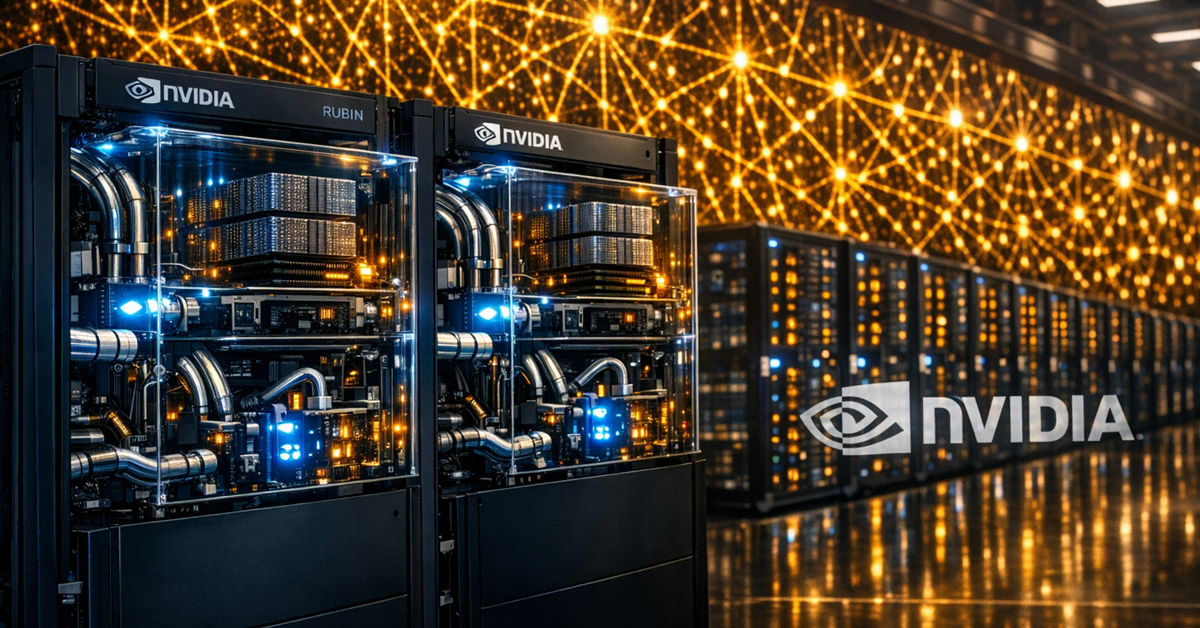
With a market capitalization that has crossed the $4.5 trillion threshold, NVIDIA’s influence extends far beyond the semiconductor industry. The organization now operates as a vertically integrated systems provider, encompassing silicon, networking, software, and full-rack data center solutions. This strategic evolution is exemplified by the rapid cadence of its architectural releases, moving from the record-breaking Hopper platform to the newly ramping Blackwell architecture, and now toward the highly anticipated Rubin platform slated for 2026. The “virtuous cycle of AI” described by CEO Jensen Huang reflects an environment where compute demand for both training and inference is accelerating exponentially, driven by the shift toward agentic AI and multimodal reasoning.
This report provides an exhaustive analysis of the investment thesis for NVIDIA. It explores the sustainability of its unprecedented gross margins, the risks associated with extreme customer concentration among hyperscalers, and the technical moats created by its CUDA software ecosystem. Furthermore, a detailed discounted cash flow (DCF) model is presented to ascertain the intrinsic value of the company amidst a backdrop of rising input costs and intensifying competition from custom silicon and rival architectures.
Financial Architecture and Revenue Segmentation: The Data Center Era
NVIDIA’s revenue structure has undergone a profound metamorphosis over the last five fiscal years. The most recent reporting for the third quarter of fiscal 2026 reveals a company that is now overwhelmingly a data center business, with this segment contributing approximately 90% of total revenue. The scale of this growth is illustrated by the record revenue of 57.0 billion in the quarter, representing a 62% increase from a year ago and a 22% sequential jump.
Data Center Dominance and the Networking Surge
The Data Center segment reached 51.2 billion in third-quarter revenue, a 66% year-over-year increase. This performance is primarily driven by the Blackwell architecture, which management describes as having “off the charts” sales. However, the most critical second-order insight within this segment is the explosive growth of networking revenue. Following the strategic integration of Mellanox technologies, NVIDIA’s networking business—comprising Spectrum-X Ethernet and InfiniBand solutions—generated 8.2 billion in the quarter, representing a 162% year-over-year surge.
This networking growth is vital because it addresses the communication bottlenecks inherent in training massive-scale models. By integrating the ConnectX-9 SuperNIC and BlueField-4 DPU into its systems, NVIDIA ensures that its GPUs are never starved for data, thereby maximizing the utilization rates of expensive compute clusters. This holistic systems approach allows NVIDIA to capture a significantly higher portion of a data center’s total capital expenditure (CapEx) than it would by selling standalone GPUs.
| Segment Financial Performance (Q3 FY2026) | Revenue (Millions USD) | Q/Q Growth | Y/Y Growth |
| Data Center | 51,216 | 25% | 66% |
| Gaming | 4,287 | (1%) | 30% |
| Professional Visualization | 760 | 26% | 56% |
| Automotive | 592 | 1% | 32% |
| Total Revenue | 57,006 | 22% | 62% |
Gaming and the “AI PC” Resurgence
While the Data Center segment is the primary engine of growth, NVIDIA’s Gaming business remains a robust and high-margin pillar, generating 4.3 billion in revenue for the third quarter of fiscal 2026. The recent launch of the GeForce RTX 50 series, featuring the Blackwell architecture, has repositioned the gaming GPU as the centerpiece of the “AI PC”. Through the use of DLSS 4 with Multi Frame Generation and RTX-optimized TensorRT for Windows ML, NVIDIA is bringing sophisticated AI inference capabilities to local consumer devices.
This local compute capacity is strategically important because it offloads inference tasks from the cloud to the edge, reducing latency and cost for end-users. As agentic AI tools and coding assistants become mainstream, the demand for high-performance local GPUs is expected to see a sustained increase. Furthermore, the Gaming segment provides a massive developer base that is natively familiar with the NVIDIA software stack, reinforcing the company’s ecosystem dominance from the professional data center down to the individual desktop.
Automotive, Professional Visualization, and Robotics
The long-tail growth of NVIDIA is found in its Automotive and Robotics divisions. Automotive revenue for the third quarter was 592 million, a 32% year-over-year increase. The company has secured a 14 billion design win pipeline, including partnerships with industry leaders such as Toyota and Hyundai. The transition to DRIVE Thor and the deployment of NVIDIA DRIVE AV software signal a move toward software-defined vehicles where AI handles not just safety features but full autonomous navigation.
In the robotics space, the launch of NVIDIA Cosmos and the Jetson Orin Nano Super emphasizes the company’s focus on “Physical AI”. By providing world foundation models for robotics, NVIDIA is enabling the next wave of automation in manufacturing and logistics. Meanwhile, Professional Visualization, which grew 56% to 760 million, continues to benefit from the enterprise adoption of NVIDIA Omniverse for industrial digitalization and 3D simulation.
Margin Sustainability and the Semiconductor Supply Chain
A key component of the NVIDIA investment thesis is the sustainability of its exceptional gross margins, which have consistently remained above 73%. In an industry characterized by cyclicality and price erosion, NVIDIA’s ability to maintain these levels is a testament to its significant pricing power and strategic control over its supply chain.
The Pricing Power of the “NVIDIA Tax”
NVIDIA’s dominance in the AI accelerator market, where it holds a share between 80% and 92%, allows it to command premium pricing. The cost of a full rack-scale system, such as the NVL72, is so substantial that it is often likened to the GDP of small nations, a phenomenon market participants call the “NVIDIA Tax”. Customers are willing to pay this premium because the alternative—switching to a different architecture—involves massive software engineering costs and potential performance degradation.
However, management has signaled that as production for new architectures like Blackwell ramps up, gross margins may face temporary pressure before returning to the mid-70s range. For the fourth quarter of fiscal 2026, GAAP gross margins are expected to be approximately 74.8%, reflecting an optimization of the production cost structure as yields for 3nm and 4nm chips improve.
Supply Chain Bottlenecks: TSMC and the HBM4 Supercycle
The primary constraint on NVIDIA’s growth and margin profile is the supply of critical components, specifically high-bandwidth memory (HBM). The semiconductor industry has entered an “HBM4 Supercycle,” where capacity is sold out through calendar year 2026 across major suppliers like SK Hynix, Micron, and Samsung.
HBM4 is technically complex, requiring 16-high stacks and advanced packaging that significantly impact manufacturing yields. Reports indicate that memory prices increased by 246% in 2025, with further price spikes of up to 50% expected by mid-2026. NVIDIA’s ability to maintain margins despite these rising input costs depends on its volume-based leverage and its early engagement in the “extreme codesign” of memory modules with its partners.
| Key Supply Chain & Margin Indicators | Q3 FY2025 | Q3 FY2026 | FY2026 Outlook (Midpoint) |
| GAAP Gross Margin | 74.6% | 73.4% | 74.8% |
| Non-GAAP Gross Margin | 75.0% | 73.6% | 75.0% |
| Inventory Growth (Q/Q) | N/A | 32% | N/A |
| Supply Commitments (Q/Q) | N/A | 63% | N/A |
The dependency on Taiwan Semiconductor Manufacturing Company (TSMC) is another critical factor. TSMC’s 3nm technology now accounts for 24% of its wafer revenue, a concentration that highlights the geographic risk of high-end manufacturing in East Asia. NVIDIA has responded by diversifying its supply chain commitments and exploring U.S.-based fab options, though TSMC remains the sole foundry capable of producing its most advanced architectures at scale.
Concentration Risk and Hyperscaler CapEx Trends
Perhaps the most significant risk to NVIDIA’s current valuation is the extreme concentration of its revenue among a handful of “hyperscaler” customers. In the third quarter of fiscal 2026, four direct customers accounted for 61% of NVIDIA’s total sales. These customers—primarily Microsoft, Amazon, Meta, and Alphabet—are engaged in a capital-intensive race to build AI factories, with their combined infrastructure spending projected to reach 602 billion in 2026, a 36% increase from 2025.
The Debt-Fueled Infrastructure Wave
The scale of this spending is unprecedented. Hyperscalers are now allocating 45−57% of their revenue to CapEx, levels that were historically unthinkable for technology companies. To fund this, the “Big Five” raised 108 billion in debt in 2025 alone, with projections suggesting they may need to issue up to 1.5 trillion in new debt over the coming years.
For NVIDIA, this concentration is a double-edged sword. While it provides immense revenue visibility (with a reported 500 billion in chip orders spanning 2025 and 2026), it also creates a high degree of vulnerability. Any slowdown in the perceived ROI of AI investments or a broader economic downturn that constrains hyperscaler cash flows could lead to a sharp normalization of demand. Analysts are closely watching for signs of “utilization pressure,” where the build-out of data centers outpaces the ability of enterprises to monetize AI services.
| Hyperscaler 2026 CapEx Projections | Projected Spend (Billions USD) | Y/Y Growth | Capital Intensity (% of Rev) |
| Amazon (AWS) | 200.0+ | 56% | 57% |
| Alphabet (Google) | 180.0 | 98% | 45% |
| Microsoft (Azure) | 140.0+ | 59% | 48% |
| Meta Platforms | 125.0 | 74% | 52% |
| Big Five Total | 602.0 | 36% | ~50% |
The Rise of Custom ASICs: A Strategic Counter-Move
To reduce their reliance on NVIDIA and the associated “NVIDIA Tax,” hyperscalers are aggressively developing their own custom application-specific integrated circuits (ASICs). Examples include Google’s TPU, AWS’s Trainium and Inferentia, and Microsoft’s Maia.
These ASICs offer a natural advantage in inference workloads, where power efficiency and low latency are more critical than the general-purpose flexibility of a GPU. For instance, the AWS Trainium 3 chip, built on a 3nm process, claims to match NVIDIA Blackwell’s rack-scale performance while being 50% cheaper for training and consuming 40% less energy. Anthropic’s deployment of over 500,000 Trainium chips validates the viability of these internal alternatives for production-grade AI.
However, the threat to NVIDIA is mitigated by the rapid pace of its innovation. By the time a custom ASIC is designed, validated, and manufactured at scale, NVIDIA has often released a next-generation platform—such as Rubin—that resets the performance bar. Furthermore, the massive switching costs associated with moving software away from CUDA remain a potent deterrent.
Technical Hegemony: CUDA, Blackwell, and the Rubin Era
NVIDIA’s most enduring competitive moat is not its silicon, but its software ecosystem. For nearly two decades, developers have been writing AI and scientific code on the CUDA platform, which only runs on NVIDIA hardware. This has created a network effect where all major AI frameworks (PyTorch, TensorFlow) and high-performance computing libraries are natively optimized for NVIDIA GPUs.
The CUDA Switching Cost and Software-Defined Moats
Migrating away from CUDA to alternative platforms like AMD’s ROCm or Intel’s software stack requires a substantial rewriting of code and retraining of engineering teams. Even with the emergence of hardware-agnostic tools like OpenAI’s Triton, NVIDIA’s nineteen years of accumulated ecosystem advantages—including cuDNN, cuBLAS, and the Nsight toolchain—mean that the “total cost of switching” typically exceeds the potential performance or price benefits of rival hardware.
This moat is further strengthened by the “AI Factory” bundling strategy. NVIDIA no longer sells individual components but rather the entire software-defined infrastructure. This includes:
- NVIDIA AI Enterprise: A high-margin software suite that provides enterprise-grade support and security for AI deployments.
- NIM (NVIDIA Inference Microservices): Microservices that allow developers to deploy models in minutes rather than weeks, effectively locking the inference layer into the NVIDIA stack.
- NVLink and Networking: Proprietary interconnects that allow thousands of GPUs to function as a single logical processor, a level of integration that rivals cannot easily replicate.
Architecture Deep Dive: From Blackwell to Rubin
The transition from Blackwell to the Rubin architecture, announced at CES 2026, represents a significant leap in compute density and efficiency. The Rubin platform features the Vera CPU and the Rubin GPU, capable of delivering 50 PFLOPS of FP4 compute—a 5x increase over its predecessor.
| Architectural Feature | Blackwell (B200) | Rubin (R100) | Improvement Factor |
| Compute Precision | FP4 / FP8 | FP4 / FP8 | 5x (FP4 Peak) |
| Memory Support | HBM3e | HBM4 | High Bandwidth Increase |
| Interconnect | NVLink 5 | NVLink 6 | 2x Bandwidth |
| Token Cost (Inference) | 1x Baseline | 0.1x Baseline | 10x Reduction |
| Training Efficiency | 1x Baseline | 4x fewer GPUs | 4x Improvement |
The strategic intent behind Rubin is to slash the cost of AI inference and training. By delivering a 10x reduction in inference token costs, NVIDIA is making it economically viable for enterprises to deploy agentic AI at a massive scale. This aggressive product roadmap keeps competitors in a perpetual state of “catch-up,” reinforcing the market’s reliance on NVIDIA as the only vendor capable of delivering the next frontier of intelligence at the lowest total cost.
Valuation Analysis: DCF Framework and Market Sensitivity
To determine the intrinsic value of NVIDIA, a comprehensive Discounted Cash Flow (DCF) model is required. This model must account for the current hyper-growth phase while incorporating a realistic normalization of growth as the market for AI infrastructure matures.
DCF Model Assumptions
The valuation is based on a five-year projection of Free Cash Flow to the Firm (FCFF). The following parameters define the “Base Case” scenario:
- Revenue CAGR (FY2026-FY2030): 30% annually. This assumes that while the 60% growth rates of 2025-2026 are unsustainable, the continued expansion of the AI data center footprint will support a multi-year compounding effect.
- Operating Margins: Stabilizing at 65%. This reflects NVIDIA’s continued pricing power offset by rising R&D and supply chain costs.
- Discount Rate (WACC): 12%. This is calculated using a beta of 2.36, reflecting the stock’s high volatility relative to the market, and a risk-free rate of approximately 4%.
- Terminal Growth Rate: 5%. Given NVIDIA’s foundational role in the global computing stack, a terminal growth rate slightly above the long-term GDP growth is justified.
Intrinsic Value Calculation
The present value of the forecasted cash flows over the next five years, combined with the terminal value, yields a total equity value for the firm. When divided by the number of outstanding shares, the model produces the following intrinsic value estimates:
The “Base Case” DCF value is calculated at $265 per share. Compared to the current market price of ~$185, this suggests an upside of approximately 43%. However, alternative models like those from Alpha Spread and Simply Wall St suggest a more cautious valuation in the $123 range if growth decelerates faster than anticipated or if interest rates remain elevated.
| DCF Sensitivity: Intrinsic Value per Share | WACC 10% | WACC 12% | WACC 14% |
| 20% Revenue CAGR | $195 | $165 | $142 |
| 25% Revenue CAGR | $248 | $210 | $180 |
| 30% Revenue CAGR | $312 | $265 | $227 |
| 35% Revenue CAGR | $389 | $330 | $283 |
Market Multiples and Relative Valuation
In addition to the DCF, a relative valuation using price-to-earnings (P/E) multiples reveals significant compression in NVIDIA’s valuation. Despite the stock’s massive rally, its forward P/E ratio has compressed from a 2022 peak of 80x down to approximately 24.7x in 2026.
This P/E compression is driven by earnings growth that has outpaced stock price appreciation. With a PEG (P/E to Growth) ratio of approximately 0.4x, NVIDIA is arguably “cheap” relative to its projected earnings growth of 60% in FY2026 and 40% in FY2027. This disconnect suggests that the market is pricing in a “demand cliff” that has yet to materialize in the company’s guidance or backlog.
Investment Strength and Growth Potential
The assessment of NVIDIA’s investment strength in 2026 centers on its transition from a high-growth “AI play” to a stable, foundational infrastructure utility with superior operating leverage.
Sovereign AI and Nation-State Demand
A critical growth vector that is often overlooked is “Sovereign AI.” Management has stated that the company is on track to achieve over 20 billion in sovereign AI revenue in fiscal 2026, accounting for roughly 10% of total sales. Governments in Europe, Asia, and the Middle East are building their own domestic AI infrastructure to ensure data sovereignty and national security, creating a diversified customer base that is less sensitive to the profit-and-loss cycles of North American cloud providers.
The “DeepSeek Moment” and Efficiency Gains
The emergence of highly efficient AI models from competitors like DeepSeek has sparked fears that “brute-force” compute demand might peak. However, historical trends in computing suggest the opposite: as compute becomes more efficient and cheaper, the total addressable market (TAM) expands. Efficiency gains make AI viable for a wider range of industries, from healthcare (drug discovery) to industrial robotics, which in turn drives higher aggregate demand for NVIDIA’s full-stack solutions.
Strategic Capital Allocation
NVIDIA’s financial strength allows for aggressive capital return and R&D. The company generated nearly 50 billion in free cash flow in 2025 and returned 37 billion to shareholders through repurchases and dividends in the first nine months of fiscal 2026. With over 62 billion remaining in share repurchase authorization, the company has a significant buffer to support its stock price during periods of market volatility.
Final Synthesis
Investing in NVIDIA in 2026 requires an understanding that the company is no longer a “chip maker” but the orchestrator of the global AI factory. Its competitive moat is built on nineteen years of software development, a proprietary networking fabric, and an annual product cadence that out-innovates both traditional rivals and custom internal efforts by its largest customers.
While the risks of hyperscaler concentration and supply chain bottlenecks are real, they are currently outweighed by the massive backlog of 500 billion in orders and the multi-trillion dollar infrastructure debt wave that is just beginning to crest. The transition to the Rubin architecture and the expansion into Sovereign AI provide the company with the structural diversity needed to navigate a post-hypergrowth environment.
Our analysis concludes that NVIDIA remains the core holding for any portfolio seeking exposure to the digital transformation of the global economy. At a forward P/E of ~25x and an intrinsic DCF value of $265, the stock offers a compelling risk-adjusted return profile for long-term institutional investors. The “Industrial Revolution of AI” has moved beyond its early speculative phase into a durable, usage-driven infrastructure build-out, and NVIDIA remains its undisputed architect.