
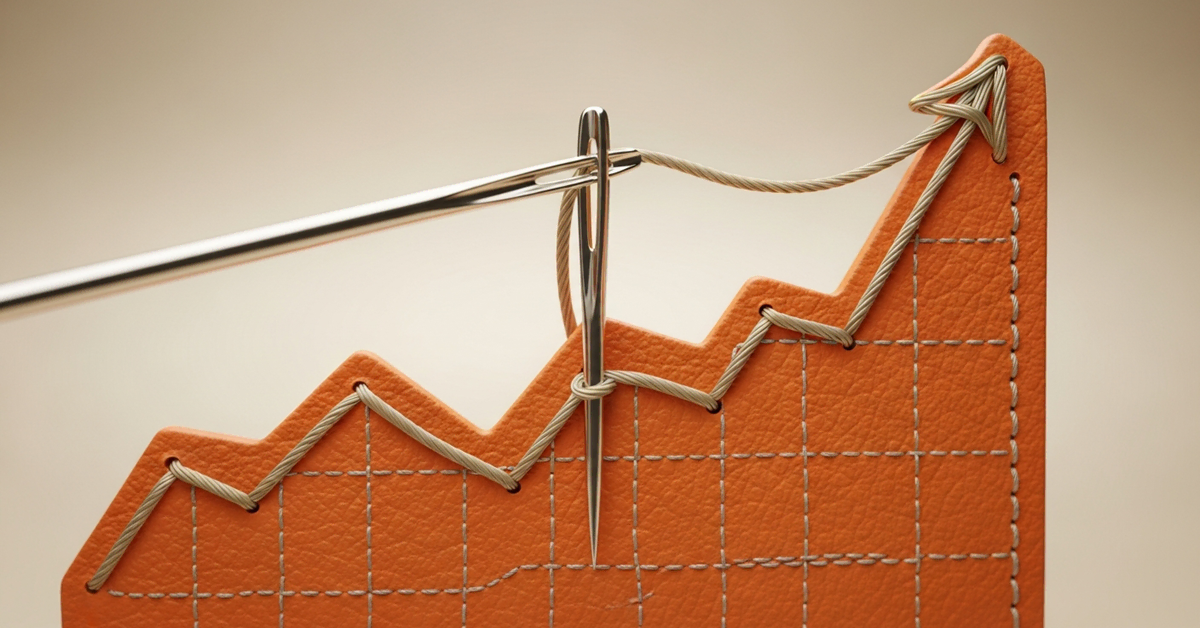
While the global luxury landscape faced significant headwinds throughout 2024 and 2025—marked by cooling demand in China and interest rate sensitivities in the West—Hermès International (Euronext Paris: RMS) has maintained a trajectory of growth that defies broader industry trends. This white paper examines the structural moats that allow Hermès to maintain operating margins above 40% and explores its standing as a premier “quality compounder” for equity investors entering 2026.
Table of Contents
The Divergence: Hermès vs. The Luxury “Big Three”
As of early 2026, the performance gap between Hermès and its peers, such as LVMH and Kering, has reached a historic apex. While LVMH reported a tepid 1% organic revenue decline in 2025, and Kering struggled with a deeper contraction due to brand repositioning at Gucci, Hermès recorded a revenue increase of approximately 9-11% at constant exchange rates over the same period.
The primary driver of this outperformance is the brand’s positioning at the extreme end of the “ultra-luxury” pyramid. Unlike aspirational luxury brands that rely on the “HENRY” (High Earner, Not Rich Yet) demographic—a group highly sensitive to economic cycles—Hermès caters to the ultra-high-net-worth (UHNW) segment. This clientele views iconic leather goods like the Birkin and Kelly bags as “safe haven” assets, effectively decoupling the brand’s sales from short-term consumer sentiment.
Structural Moats and the Artisanal Model
1. Managed Scarcity and the Waiting List Economy
Hermès operates a business model built on the paradox of supply. By intentionally keeping production below the level of global demand, the company eliminates the need for markdowns—a practice that preserves brand equity and ensures a 100% full-price sell-through rate. In 2025, while competitors increased marketing spend to move inventory, Hermès maintained record-low marketing-to-sales ratios, relying on the inherent desirability of its waitlist-only products.
2. Vertical Integration and Craftsmanship
A significant portion of Hermès’ resilience stems from its manufacturing base. Over 60% of its production remains in France, focused on artisanal workshops rather than mass-industrialized facilities. This allows for meticulous quality control and protects the brand from the supply chain volatility and subcontracting issues that have plagued other European luxury houses in recent years.
3. Leather Goods Dominance
The Leather Goods and Saddlery division remains the powerhouse of the group, contributing nearly 45% of total revenue. In the fiscal year 2025, this segment grew by double digits, far outstripping the Ready-to-Wear and Watch categories of its rivals. Leather goods act as an anchor; they are less trend-dependent and possess a secondary market value that often exceeds the original retail price, further reinforcing their status as an investment grade purchase for consumers.
Financial Performance and 2026 Projections
Hermès enters 2026 with a robust balance sheet characterized by a net cash position exceeding €11 billion. Key financial metrics highlight the efficiency of its operations:
| Metric | 2025 Estimate (Reported) | 2026 Forecast |
|---|---|---|
| Revenue Growth (Constant FX) | +10% to +12% | +8% to +10% |
| Operating Margin | 41.4% | ~40.5% – 41.0% |
| Net Profit Margin | 28.0% – 30.3% | ~31.2% (Adjusted) |
The company’s ability to implement 6-7% price increases annually without sacrificing volume is a testament to its unparalleled pricing power. In 2025, the group rewarded its 25,000 global employees with a €4,500 bonus, reflecting a profit-sharing culture that stabilizes its workforce during labor shortages in the artisanal sector.
Investment Thesis: Euronext Paris: RMS
The “Quality Premium” Valuation
From an investment perspective, Hermès has historically traded at a significant premium to the MSCI Europe Textiles, Apparel & Luxury Goods Index. As of January 2026, the stock trades at a forward P/E ratio of approximately 45x to 49x. While value-oriented investors may find this steep compared to LVMH (trading at ~26x), the premium is justified by Hermès’ lower earnings volatility and superior return on equity (ROE).
Growth Catalysts for 2026
- Asia-Pacific Resilience: Despite broader Chinese economic concerns, Hermès’ “store-of-value” status has allowed it to maintain positive growth in the region, even as rivals see sales plummet.
- Capacity Expansion: The opening of new leather workshops in France (such as the Normandy and Auvergne sites) will incrementally increase supply, allowing for steady volume growth without diluting exclusivity.
- Dividends and Payouts: Hermès maintains a conservative but consistent dividend policy, supplemented by occasional “extraordinary” dividends when cash reserves exceed operational needs.
Risk Factors
The primary risk to the Hermès investment thesis is a “derating” of quality stocks in a high-interest-rate environment. Additionally, as a family-controlled entity, the company prioritizes long-term brand health over short-term stock performance, which may result in “missed” growth opportunities during speculative bull markets. Geopolitical tensions also remain a factor, particularly regarding potential luxury tariffs in major markets.
Conclusion
Hermès International remains the gold standard of the luxury sector. Its commitment to the “vrai luxe” (true luxury) model—prioritizing craftsmanship and scarcity over volume—has created a business that is functionally recession-proof. For investors, the stock represents a defensive play within the discretionary sector, offering a rare combination of high margins, organic growth, and brand immortality. As the luxury “super-cycle” shifts toward value over volume in 2026, Hermès is uniquely positioned to continue its market leadership.